

Secrid's Salamander Mechanism Isn't Talked About Enough
The anti-jam mechanism inside the Secrid Cardprotector, and why it matters more than you think.

If you have ever owned a pop-up wallet then you may have come across a common problem that has previously plagued this type of wallet. I am talking, of course, about card jamming. Whether it is age, a faulty mechanism, or simply user error from cramming far too many cards in, a jammed pop-up wallet is not just useless but one where your cards are effectively eaten up and lost to the innards of the wallet itself.
Secrid's Salamander Mechanism: A genius way to solve your cards getting stuck
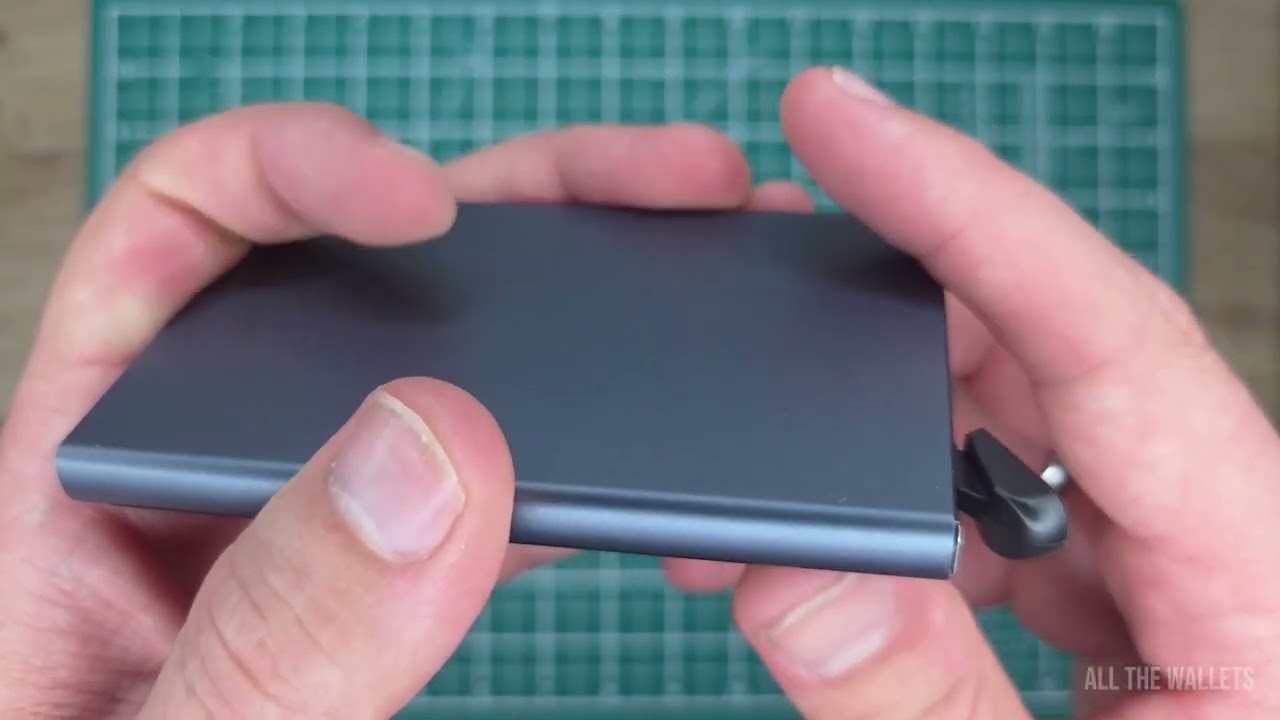
When I had the opportunity to visit Secrid’s HQ and meet the team, it was not just an amazing experience but one where I learned a lot about design and how brands learn, innovate, and eventually develop solutions to issues like this.
Secrid invented the pop-up wallet, the Cardprotector, back in 2009. But it became clear they were having a problem: user error. Something that could not be predicted or accounted for before the wallet was out in the world and Secrid could see first hand how people were using, or in this case abusing, their wallets.
So they went back to the drawing board to improve the Cardprotector mechanism and account for cards getting stuck. In 2016, Secrid succeeded, and the new and improved Salamander mechanism was born.

What Is the Salamander?
The Salamander is specifically the redesigned ejector lever, designed in 2016 and released in 2017. It is aptly named after the real-life salamander’s ability to regenerate lost limbs and its tail, much like the improved mechanism itself. As Secrid put it themselves: “It is so called because of the split arm that pushes the cards outwards. Just like a real salamander, the mechanism can repair itself.”
So how does it actually work? Please bear with me here because this gets technical, and I would not blame you for skipping this section. Unlike Secrid’s original mechanism developed in 2009, which used a one-piece ridged arm to cascade cards out, the Salamander lever is split into two cooperating parts. The first is known as the barrel: a long arm carrying the classic stepped card-contact faces that eject the full card stack. The second, dubbed the trigger, is a shorter, high-force arm connected to the finger button.
The two are held together by a reversible break coupling, a slide-cam and nose arrangement. Under normal use the trigger drives the barrel and both move as one. If cards jam, the barrel meets resistance. Continued force makes the nose ride over the slide cam so the coupling breaks, or uncouples, rather than the whole lever snapping. This delivers extra ejection force to shift the jammed cards and produces an audible click. Pressing the lever firmly back re-engages the coupling with another click, restoring normal operation. This is why Secrid describes it as splitting in two and being able to repair itself.


How the Salamander Works in Practice
So you have just unboxed your brand new Cardprotector in all its slim, shiny glory. In an excited state, you grab seven cards and cram them inside the mechanism. It feels like you are forcing them in, but you are too excited to notice. Immediately you realize something is wrong. The Cardprotector’s lever will not budge. You press it down and the cards do not pop out. They are stuck.
But luckily, you bought a Secrid.
All you need to do in a situation like this is pull the lever back. You should hear a click. Do not worry, you have not broken the wallet, nor should you worry about the mechanism breaking. Trust me, it can feel fragile but it can take it. Once the click has been heard, the lever should go very loose. Pull the lever back as you normally would and those stuck cards should release, almost like magic. Click the lever back into place to hear another firm click, and your Cardprotector should be working as normal.
It is fair to say I have used Secrid wallets for many years at this point, and I am not ashamed to admit that even the Salamander mechanism was new to me. That is partly my own fault, but partly Secrid’s too. They do not boast about the feature, nor is it really talked about on their website. A quick browse of their product pages turns up no mention of it. It is only when you delve deep into their FAQ that a small section covers this obscure feature. I understand why they do not shout about it. Why would you bring attention to an issue that somebody might not know could exist? That could put people off.

Why the Salamander Matters
There are millions of knock-off pop-up wallets on the market. At this point they are one of the most popular types of wallet available. So when it comes to choosing one, they can all look the same. The point of this article is that they are not. It took a brand like Secrid to come along, innovate, and solve the problem. If you are purchasing a knock-off wallet, there is no Salamander. If your cards get stuck, good luck, because it is probably going to take breaking the wallet to get them out.


What Other Brands Have Done
Although Secrid have their own method for freeing stuck cards, they are not the only brand to have developed a system, though there are not many. Earlier this year Ekster released their Cardholder for MagSafe, their first wallet with a way to remove the entire mechanism from the underside of the wallet. It works, and it is cool to see the mechanism disassemble. It can be cleaned, inspected, and any stuck cards removed. My biggest issue with Ekster’s method is that it requires an additional tool: a SIM card or paper clip style tool. Nobody is carrying a SIM removal tool with them, and if you are out and about and your cards get stuck, you are pretty much stranded. I also do not want to faff around taking the wallet apart in that situation. It is a solution, but simply not as good as Secrid’s.
The only other brand I know of with a method for removing stuck cards is Lorzor. Similar to Ekster, this also requires a small SIM style tool that can be inserted into the bottom of the wallet, which simply pushes one card upwards to release it. Like Ekster, it does not require disassembly, which can be a positive or a negative depending on how you view it, but it gets the job done.

One of Secrid’s Key Differentiators
The Salamander mechanism, for me, is a key differentiator of the Secrid wallet and showcases the brand’s attention to detail and commitment to care and repair. If you are considering a knock-off or no-name pop-up wallet, you can often find yourself searching for a reason not to spend the extra money on a wallet from a more expensive brand like Secrid.
But that is just it. Secrid wallets are built to last, carefully crafted with every potential eventuality thoughtfully solved. And not only that, if you have a wallet that predates the Salamander mechanism, you can have it updated with the new mechanism at any of Secrid’s care and repair points. Now that is customer service.