

An Exciting Update to the Secrid 2003 Wallet
Secrid handed me the wallet I wrote about but had never held. Here is how it works, and why it failed.

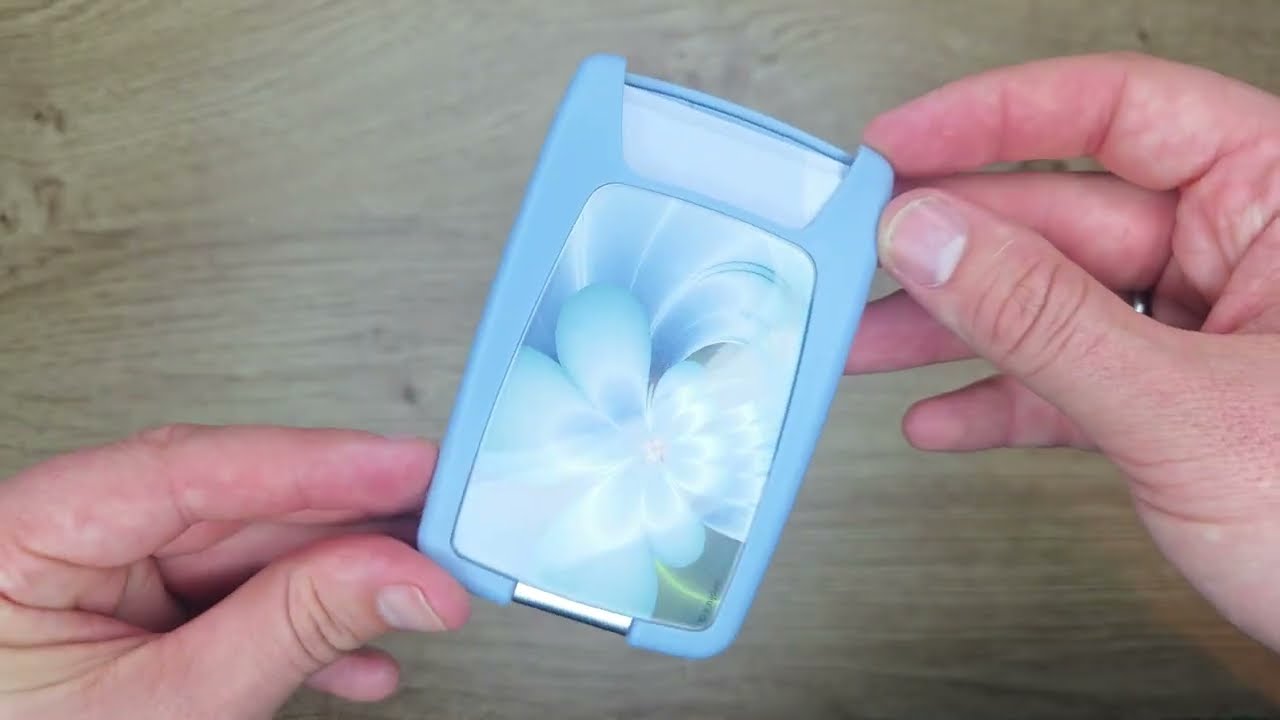
So in early September 2026, I had the honor and privilege of being invited to Secrid's headquarters in The Hague, to visit the factory, meet the team and learn more about the brand behind the wallets. While there, the team was kind enough to gift me the very wallet I talked about in this article: the Secrid 2003. So, without further ado, here it is in all its sleek curved glory.
The Secrid Wallet: Secrid's Long Forgotten 2003 Wallet
Confirming How the Secrid 2003 Works
First of all, let’s talk about how this wallet worked. One thing I did not mention in the original article above was how cards are stored and accessed. Cards are stored within a central slot smack bang in the middle of the wallet, which you need to first open. How is this done? Well, like the Bodycard, the opening is attached to a metal spring. This provides the flexibility to open the wallet up to the interior and access cards, but also return to its closed position when not in use. Cards are accessed by pulling this section of the wallet back, fanning through the cards like you would fan through a deck of cards. It is incredibly simple, but intuitive, and works like a charm.

The biggest difference between this wallet and Secrid’s original 1995 wallet is the added functionality of coin storage. One of the biggest criticisms of the Bodycard was the fact that you could not store coins or cash and it was solely a credit card holder. Considering the time, the mid 90s, physical cash storage was definitely non-negotiable, so it makes sense why they came up with the idea for the 2003 wallet. So how did this feature work? Well, I was pretty bang on with my original theory of how this works, mentioning a small tray that can be slid out from the front of the wallet. This tray is large enough to store around four or five coins, depending on the mix of coins you are carrying, or even bills if you wish, and then slid back into place. I also managed to easily fit in an SD card and a small wet wipe. These so-called money trays are very popular wallet accessories today, sold by the likes of Ridge and Ekster, and I previously tried to discover exactly who first popularized or conceived this style of storing small miscellaneous items.

A Design That Is Coming Back in Style
One of my favorite aspects of the 2003 Secrid has to be its unique design. While the original Bodycard had a very angular design with harsh right-angled edges, the wallet released eight years later could not be anything different. This wallet has a very curved look to it, with smooth rounded edges and contours that do not look like any wallet I can think of today. Turns out, when talking to René, his inspiration regarding the design of the 2003 wallet was the Nokia 3310, which has a very similar design in terms of its curved rounded edges. Funnily enough, I believe this sort of design is not far removed from coming back into style with the early 2000s nostalgia wave of what is often dubbed Y2K design.


A Unique Level of Personalization
One thing you may have noticed about the 2003 wallet is the unique art or image that is located on the very front of the wallet. This is actually a picture located underneath a plastic panel, and the cool thing about this is it can be opened and that image replaced by one of your own choosing. This is a unique level of personalization that, again, was a very unique feature of its time. Before this wallet, it was really just simple leather embossed monograms that were semi-common, so having the ability to swap in images of, say, your family, your wife, whatever you want, was a very unique feature and made sense for the time this wallet was built. If you are of a certain age, the idea of carrying an image of your family around in your wallet was very common before the development of smartphones basically rendered the whole practice obsolete.

Why Did the Secrid 2003 Wallet Fail?
The Secrid 2003 wallet failed because of the reasons mentioned above, but I had the opportunity to ask René himself why he felt the wallet did not take off. He said it came down to a combination of factors, but it was the wallet’s thickness that really put people off. The wallet comes in at 103mm long, 68mm wide and 21mm thick, which to me is not overly large, especially considering the time, when bulky bifolds were the norm. But carry the wallet for a few days and you do feel the bulk, and I think it is not the thickness alone but that combined with its hard plastic material that simply makes the wallet uncomfortable to carry. Combine this with its size and it is easy to see why this wallet did not take off.

A Cool Store Display for a Wallet of the Future
I also got a glimpse of the retail stand that Secrid used to showcase the wallet in stores. It is a beautiful design in itself. It rotates 360 degrees, and it stores multiple wallets in a column. When one is taken out, a spring loaded mechanism inside, which you cannot see, automatically brings out the next wallet in the line. The best way I can describe it is like a vending machine where chips or drinks are stacked one behind the other. Once you take one out, the next one is automatically brought to the front. I am not entirely sure which shops stocked these, but if it is anything like the original 1995 Bodycard, which sat by the counter in petrol stations, I believe the Secrid 2003 was sold in a similar manner.

It is also worth mentioning that from this image of the store’s display you can see that the wallet was originally sold for a price of just €10. Putting that into an inflation calculator for 2003, when the wallet was sold, and it would come in today at €16.45. Very affordable by today’s wallet standards.