

The Biker Wallet: Origins and Evolution
From Roadside Utility to Rebellious Style Icon we unpack the iconic Biker Wallet and Chain.

Biker wallets (also known as Chain Wallets orTrucker Wallets) are a style of wallet characterized by a leather pouch attached to a metal chain. This design originated as a practical solution for motorcycle riders and truck drivers to secure their valuables, but over time it transformed into a fashion statement embraced by various subcultures and mainstream style. The following article explores the biker wallet’s history and cultural roots, the evolution of its design (from pure utility to stylistic accessory), the defining features that set it apart (especially the iconic chain), and the key brands or makers that popularized it.
Post-War Origins in Biker Culture and Utility Use
The biker wallet’s origin is tied to the rise of motorcycle culture in the mid-20th century. After WWII, many young veterans and adventurers took to motorcycles, forming the first biker subcultures. A chain secured to the wallet and hooked to the belt loop became a staple among bikers by the 1950s, both for practical reasons and as part of the biker image.
Riders found that a tethered wallet provided peace of mind: it prevented accidental loss from pockets due to wind, vibration, or movement, and made theft or forgetfulness less likely. As an article from Biker Ring Shop puts it best, *“losing a wallet is a disaster, especially for a biker touring across the country. Therefore, a wallet chain is not just an ornament, it is a must”* .
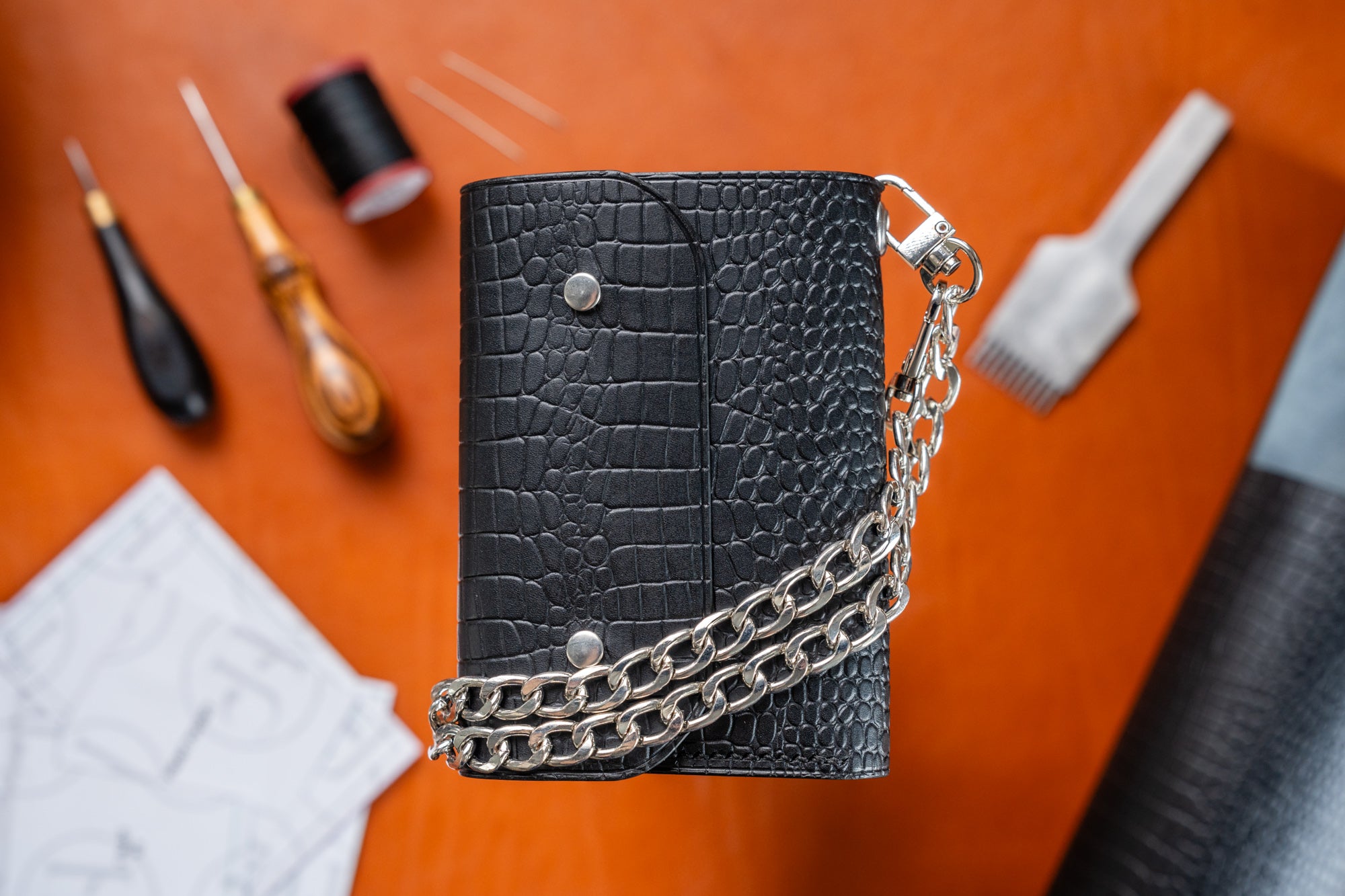
Hanmade Biker Wallet from JH Leather
This sentiment was equally true for long-haul truckers of the era, dubbed “knights of the road”, who relied on chained wallets so they wouldn’t leave their billfold behind at a diner or gas stop during cross-country drives. The idea of strapping valuables to oneself was not entirely new (19th-century cowboys often fastened wallets to their belt, and Victorian gentlemen used chains for pocket watches), but 1950s bikers and truckers firmly established the wallet-on-a-chain as standard gear in their communities.
Purpose and Design: Defining Features of a Biker Wallet
In form, a traditional biker wallet is typically a long or tri-fold leather wallet secured with one or more snap buttons. It is distinguishable by the metal grommet or reinforced hole in one corner, through which a sturdy metal chain is fastened. The other end of the chain attaches to the rider’s belt (often by a clasp or a leather loop that snaps around the belt), effectively tethering the wallet to the wearer.

A mini-sized Biker Wallet from American Brand Mr. Lentz
This ensures that even if the wallet slips out of a pocket or is dropped, it will dangle instead of getting lost. Biker wallets are generally made of thick, high-quality leather (for example, harness leather or cowhide) to withstand the rigors of travel and daily wear. Interiors usually feature multiple compartments for cash, cards, and sometimes a zippered coin pouch, reflecting the biker’s need to carry essentials securely on long rides.
Some key stylistic and functional elements of a classic biker wallet include:

Heavy Leather Construction: Crafted from thick leather (often cowhide or horsehide) for durability against weather and wear. The leather often starts stiff and ages with a patina, reinforcing the rugged look.
Image Souce: (This quality example from Cult Classic Leather showcases the sheer size and quality of leather used in Biker Wallets).

Secure Snap Closure: Most biker wallets use snap buttons or a flap to keep the wallet closed, ensuring contents don’t spill out even if the wallet falls. The snaps themselves may be decorative (for instance, some feature conchos or engraved motifs like skulls or eagles, reflecting biker style).
Image Source: (A beauiful example of an ornate snap-closure with patternation. This is from SmyrnaLeatherCraft on etsy).

Metal Chain Attachment: A robust metal chain (commonly 12-20 inches long) is the defining feature. One end attaches to the wallet (via a metal grommet or loop in the wallet’s corner) and the other end clips to a belt loop or a leather belt attachment. This chain prevents loss or theft: if the wallet drops or a thief tries to grab it, it stays tethered to the wearer.
Image Souce: (check out this chain from brand Rat Ryder a lovely example of a quality wallet chain with addtional charms).

Multiple Compartments: Designed for utility, these wallets often include several pockets or slots for cash, identification, credit cards, and sometimes a clear ID window or coin pocket. The larger size (many are longer than a typical billfold) accommodates currency without folding and more storage capacity, useful for riders on long trips who carry maps, licenses, and various cards.
Image Souce: (This wallet from Harley Davidson showcases the sheer capacity of Biker Wallet’s with over 15 card slots).

Optional Ornamentation: While early biker wallets were plain, over time many have adopted biker-themed adornments. Studs, tooled leather designs, club insignias, or embossed logos (like the Harley-Davidson bar and shield) are common. Likewise, the chains themselves might feature decorative elements (spikes, miniature skull links, or pendants on the clips) especially as the item became a fashion statement.
Image Source: (this amazinfg design here comes from Biker Ring Shop. Check ou their Pirate Skill Wallet).
From the Road to the Rebel Scene (1970s, 1980s)
By the 1970s, the biker wallet, and particularly its conspicuous chain, had been discovered by other counterculture groups, most notably the punk rock scene. What began as a biker’s safety measure took on new meaning as a symbol of rebellion. Early punk rockers in the UK and U.S. adopted wallet chains as part of their anti-establishment uniform, pairing them with ripped jeans, leather jackets, and band T-shirts.
This crossover happened as the biker subculture and rock music culture intersected, especially in venues where young people headbanged and moshed. The wallet chain offered a practical benefit in those chaotic punk rock clubs: punks could flail around in a mosh pit without their wallet flying out, and the chain made it harder for thieves to pickpocket them in crowded venues. Members of bands and fans alike sported chains hanging from their belts, which not only kept their “stash” safe during concerts but also looked undeniably cool and defiant.

As the punk movement grew in the late ’70s, the aesthetic of the chain wallet evolved. Bikers tended to use relatively short, utilitarian chains, but punks saw an opportunity to exaggerate and accessorize. They began using extra-long chains - some dangling to knee length or beyond, purely for the dramatic effect. The clinking, rattling sound of a long chain slapping against the thigh became almost a point of pride: the louder and more ostentatious, the better. In fact, many punk and hardcore kids doubled or even tripled up their wallet chains for a layered look and extra noise, turning a safety item into a piece of wearable attitude.
By the early 1980s, wallet chains had become synonymous with youthful rebellion and nonconformity, sported not just by punks but by myriad subgenres from goths to metalheads. Goth and industrial music fans (so-called “rivetheads”) embraced chains for their tough, quasi-industrial look, wearing them alongside black clothing and metal-studded gear. Similarly, heavy metal enthusiasts in the ’80s added wallet chains to their leather-and-denim ensembles, further cementing the chain wallet’s image as an edgy accessory of the counterculture. What all these groups had in common was an affection for the rough-and-tumble biker aesthetic - the chain wallet thus migrated from the highways to the punk clubs, carrying with it an aura of outlaw freedom and gritty style.

Mainstream Popularity and Modern Trends (1990s, Present)
In the 1990s, the chain wallet jumped from the underground into mainstream fashion. What was once the hallmark of bikers and rockers suddenly found its way onto Hollywood actors, popular musicians, and even the runway. 90s celebrities in the punk-influenced and grunge music scenes, and later the nu-metal and hip-hop scenes, embraced wallet chains as part of their look.
For example, members of bands like Linkin Park, Korn, and other alternative acts were frequently seen with chains dangling from their baggy jeans (so much so that the chain wallet became a signature of late-90s nu-metal style). This visibility propelled the accessory into wider use. Skateboarders, who often overlapped with punk and hip-hop culture, also picked up the trend: in the late ’80s and early ’90s, skate culture icons and brands helped popularize the wallet chain among urban youth.
What had started as a biker’s safeguard was now a cool fashion statement for teenagers hanging out at the mall. During this era, it wasn’t uncommon to see high schoolers and college kids (who may have never been near a motorcycle) sporting chain wallets simply because it was “in.” Fashion magazines and retail stores took note, and suddenly chain wallets were sold everywhere from alternative clothing boutiques to mainstream department stores.

After the 2000s peak, the wallet chain’s ubiquity in everyday fashion waned a bit (by the late 2000s, some viewed it as a dated 90s fad). However, it never disappeared, core biker communities never stopped using their chain wallets, and the item continued to be part of biker attire regardless of broader trends (source). Meanwhile, in certain regions like Japan, the wallet chain maintained a steady popularity. Japanese street fashion, with its love for American vintage and rockabilly styles, kept the chain wallet alive and well through the 2000s.
In the late 2010s and into the 2020s, the chain wallet has seen a revival as nostalgia for 90s fashion grows. Style influencers and new generations of musicians have brought it back, now wearing it with a sense of retro flair. Modern streetwear brands have begun offering updated takes on the chain wallet - sometimes with detachable chains, colored metals, or vegan leather - aiming to blend contemporary tastes with the accessory’s classic rebellious vibe. What’s old is new again: the wallet chain’s comeback is a nod to its enduring appeal.